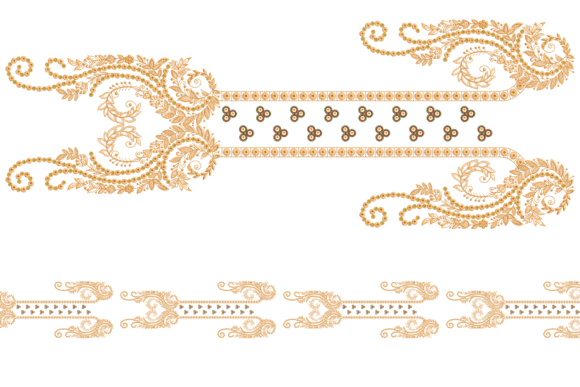
Indian Floral Embroidery Borders Review
As a professional embroidery designer who has spent years translating digital concepts into tangible threads for small businesses, I approach every new machine embroidery design with a critical eye. The market is flooded with generic patterns, but finding assets that truly elevate brand identity while maintaining technical integrity is rare. Recently, I evaluated the Indian Floral Embroidery Borders collection for potential use in high-end merchandise and branded patches. My goal was to determine if this design could transition from a decorative file to a functional asset for apparel decorators, Etsy sellers, and boutique owners.
First Impressions: Cultural Depth Meets Professional Craft
Upon opening the digital embroidery file, the first impression of Indian Floral Embroidery Borders is one of elegance and intricate detail. The description promises "intricate botanical motifs and ornamental details," and the visual preview delivers exactly that. Unlike many modern designs that rely on bold, blocky shapes, this collection leans into the rich heritage of Indian textile art. It feels premium, handmade, and deeply rooted in tradition. For a business owner looking to add a "rich cultural touch" to their products, this aesthetic immediately signals quality.
The design does not feel playful or rustic; instead, it exudes a classic, sophisticated vibe. This makes it an excellent candidate for brands that want to communicate craftsmanship and attention to detail. Whether you are a florist creating custom tote bags or a café designing aprons for your staff, the ornamental nature of these borders suggests a level of care that customers can see and feel. However, the complexity also raises immediate questions about stitch density and fabric compatibility, which are crucial for commercial success.
Evaluating Real-World Business Applications
The true test of any embroidery file is how it performs when applied to actual merchandise. I visualized several scenarios where Indian Floral Embroidery Borders could transform standard items into branded assets.
Staff Uniforms and Apron Embroidery
For small businesses like bakeries, boutiques, or creative studios, staff uniforms are a walking billboard. Using these borders as a chest logo accent or a sleeve detail on chef coats or server shirts adds a unique flair. Imagine a bespoke bakery where the apron features a subtle floral border along the hem. It instantly elevates the perceived value of the service. The intricate botanical motifs work well here because they frame the brand without overwhelming it, provided the scale is managed correctly.
Custom Apparel and Tote Bag Design
Tote bag design is a massive category for handmade brands and event merch. A simple canvas bag becomes a premium product when accented with Indian Floral Embroidery Borders. Placing the border along the top edge or wrapping it around the handle attachment points creates a cohesive look. Similarly, for custom apparel like denim jackets or flannel shirts, these borders can serve as a striking back print or a pocket accent, appealing to customers who appreciate artisanal details.
Branded Patches and Caps
Creating an embroidered patch from this design is a viable strategy for local businesses wanting to sell merchandise or give away customer gifts. The ornamental details allow for a standalone patch that looks complete even without text. For cap embroidery, however, caution is needed. While a full border might be too large for a cap front, a segmented portion of the design could work beautifully as a side detail or a brim accent, offering a more subtle branding approach than a traditional logo.
Critical Considerations for Production
While the aesthetic appeal is undeniable, an experienced designer must address the technical challenges. The "intricate botanical motifs" mentioned in the product description imply a high level of detail that can be problematic if not executed properly.
Stitch Density and Fabric Texture
One of the primary concerns with Indian Floral Embroidery Borders is stitch density. Intricate designs often require many stitches per square inch, which can cause puckering on lighter fabrics like linen or thin cotton. If you plan to use this on textured fabric, such as heavy twill or fleece, the fine details may get lost or blend into the weave. Always test the design on a scrap piece of your intended material first. Using a proper stabilizer is non-negotiable here; a cutaway stabilizer will likely be necessary to support the weight of the thread and prevent distortion.
Scaling and Hoop Size
When adapting these borders for smaller applications, such as a tiny patch or a collar detail, you risk losing definition. The ornamental details may become muddy if the design is scaled down too aggressively. Before committing to production, confirm the minimum recommended hoop size and ensure the design remains legible at that scale. If the file allows for resizing, check the spacing between elements to ensure the machine needle doesn't collide or leave gaps.
Thread Colors and Contrast
The beauty of this design relies heavily on color interplay. On dark uniforms, light thread colors will pop, but you must ensure there is enough contrast to distinguish the botanical motifs from the background. Conversely, on light fabrics, darker or metallic threads can enhance the premium feel. I recommend reviewing the thread colors against your brand palette before running a full batch. A mismatched color scheme can make the design look cheap rather than luxurious.
Impact on Brand Identity and Customer Trust
Incorporating Indian Floral Embroidery Borders into your small business merch does more than just decorate; it builds trust. When customers see high-quality, detailed embroidery, they associate that craftsmanship with your brand's overall reliability. This is particularly effective for handmade product lines where the story of creation matters. The design acts as a visual shorthand for "premium" and "thoughtful," encouraging higher engagement and potentially justifying a higher price point.
Furthermore, consistency is key. Using these borders across various touchpoints—product packaging accents, employee attire, and retail bags—creates a unified visual language. This visual consistency strengthens brand identity and makes your business more recognizable in a crowded marketplace. Whether you are selling on Etsy or operating a physical storefront, the finished product speaks volumes about your commitment to quality.
Practical Designer Notes for Implementation
To successfully integrate Indian Floral Embroidery Borders into your workflow, follow these practical steps:
- Test in Black and White: Before selecting your final thread colors, run a test in black or white to evaluate the structural integrity of the design and the flow of the stitching.
- Verify Commercial Licensing: Always confirm the licensing terms of the digital embroidery file before using it for business. Ensure you have the right to create unlimited products for sale.
- Create a Printable Mockup: Use a printable mockup to show clients or stakeholders how the design will look on the final item. This helps manage expectations and speeds up approval.
- Inspect Spacing and Alignment: Check the spacing between repeating elements to ensure the border flows naturally without awkward gaps or overlaps.
- Compare with Other Assets: Place the design beside your existing design assets to ensure it complements your logo and other graphics rather than competing with them.
- Check File Details: Since specific stitch counts and hoop sizes were not explicitly listed in the general description, verify these metrics in the file properties before production to avoid machine errors.
In conclusion, Indian Floral Embroidery Borders offers a stunning opportunity for businesses seeking to infuse their merchandise with cultural richness and artisanal quality. By respecting the technical requirements of commercial embroidery and carefully planning its application, you can turn this design into a powerful tool for brand elevation. Whether adorning a staff apron, a luxury tote, or a limited-edition patch, these borders promise to deliver a finished product that stands out in the marketplace.